Best Time To Visit Margaret River: A Month By Month Guide
Margaret River rewards almost every month of the year, but the sweet spot depends on what you are coming for: whales, wildflowers, dry forest tracks or warm afternoons in the saddle.
Short answer
October and November are the best months to visit Margaret River for most travellers. Wildflowers peak, humpback whales pass through Geographe Bay with calves, daytime temperatures sit near 20 degrees, and rain eases before summer crowds. March and April run close behind, with warm, dry conditions and quiet forest trails.
What Is The Best Month To Visit Margaret River?
October and November are the strongest months overall: spring wildflowers peak across the region, humpback whales move through Geographe Bay with calves, daytime temperatures sit close to 20 degrees, and the heavy winter rain has eased before the summer crowds arrive. March and April run them close, offering warm, dry forest tracks and quieter trails.
That is the short answer. The longer answer depends on what you are actually coming to do, because Margaret River is a region of two climates: a mild, windy coast along Leeuwin-Naturaliste National Park and a slightly warmer, wetter inland strip around Witchcliffe and Rosa Brook where most of the horse riding happens. A month that is perfect for a coastal walk can be soggy under hoof in the forest, and a summer fortnight that feels hot in town can be genuinely pleasant on a shaded karri track by mid-morning. Where you can legally ride is just as patchy as the weather, and our guide to horse riding access rules across Australia explains which land managers actually allow it.
This guide works through the year month by month using long-term Bureau of Meteorology averages, then layers on the seasonal events that shape most trips: the whale migration, the wildflower season, the bushfire outlook, WA school holiday dates and, because this is a riding site, which of the Jesters Flat rides suit which conditions. The operator runs all eleven of its rides from a farm at Rosa Brook, about 20 minutes east of town, so trail conditions there matter more than the beach forecast. If you're still weighing up which town to base yourself in, our guide to choosing between Busselton and Margaret River compares the two on travel times, beaches, forests and whale seasons.
If you are also weighing up the drive down, the route and stop options are covered in the Perth to Margaret River driving guide, and the broader case for each season is summarised on Margaret River Horse Riding.
Month By Month Weather: The Witchcliffe Averages
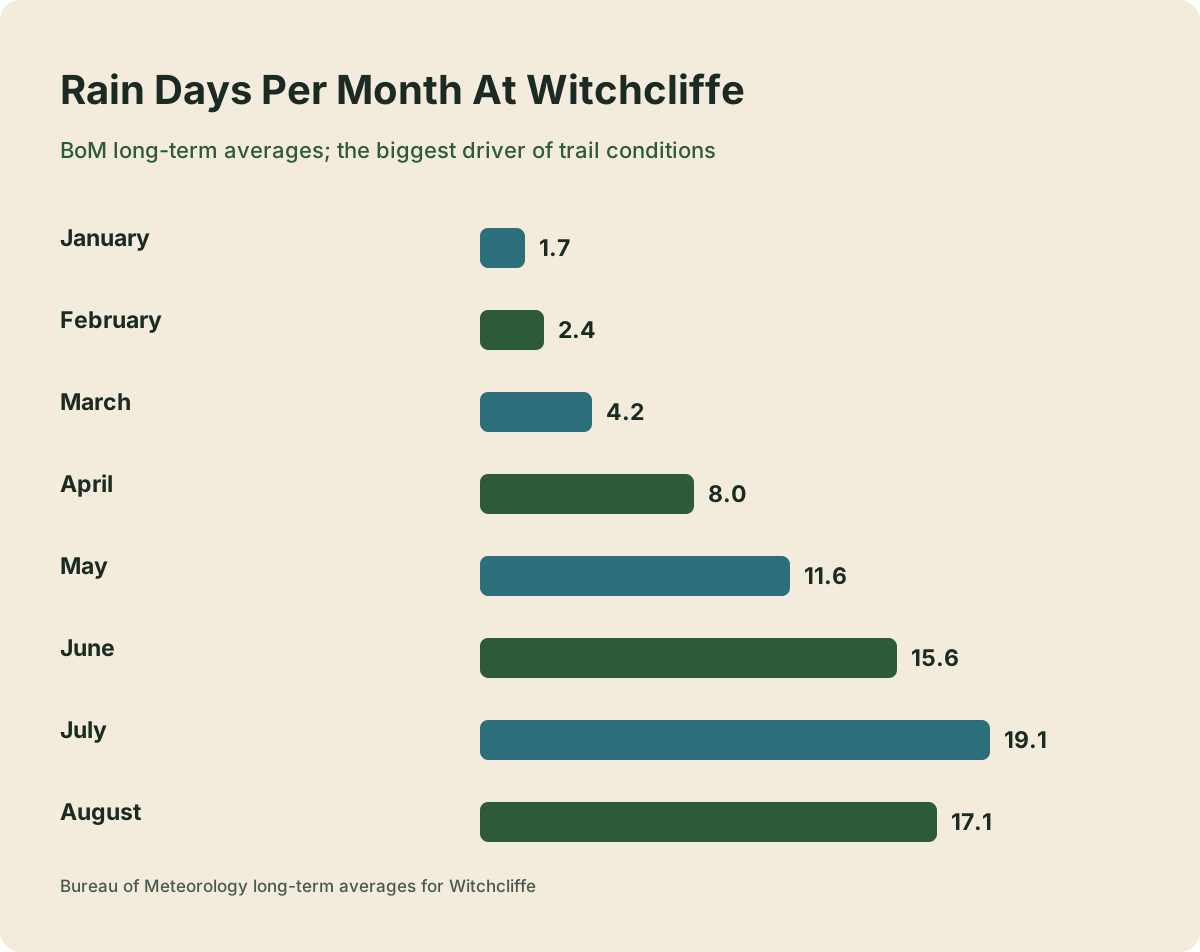
Witchcliffe, the BoM station closest to the riding country inland of Margaret River, averages summer highs of 26 to 27 degrees and winter highs of 16 to 17, with the wettest months June and July delivering 179.7 and 194.1 mm respectively. Rain days climb from under 2 per month in January to about 19 in July, which is the single biggest driver of trail conditions.
These are long-term averages, not a forecast for your dates, but they frame the year well. The inland strip is a couple of degrees warmer than the coast in summer and noticeably wetter in winter, and that combination is what makes spring the sweet spot: the country is green and flowering, the tracks are drying out, and the afternoons are warm without being hot.
| Month | Mean max (C) | Mean min (C) | Mean rain (mm) | Rain days (1 mm+) |
|---|---|---|---|---|
| January | 26.6 | 13.9 | 12.3 | 1.7 |
| February | 27.1 | 14.4 | 12.2 | 2.4 |
| March | 25.6 | 13.3 | 27.8 | 4.2 |
| April | 22.5 | 11.3 | 62.6 | 8.0 |
| May | 19.7 | 9.8 | 132.3 | 11.6 |
| June | 17.5 | 8.9 | 179.7 | 15.6 |
| July | 16.4 | 8.2 | 194.1 | 19.1 |
| August | 16.8 | 8.2 | 157.7 | 17.1 |
| September | 17.5 | 8.6 | 108.7 | 14.7 |
| October | 19.7 | 9.4 | 63.8 | 9.5 |
| November | 22.8 | 10.9 | 34.7 | 5.9 |
| December | 24.9 | 12.4 | 17.9 | 3.0 |
The numbers come from the Bureau of Meteorology's long-term averages for Witchcliffe, published at the Witchcliffe climate table. Read the rain-day column rather than the rainfall column when planning a ride: 63.8 mm spread over 9 days in October is a very different proposition to 62.6 mm over 8 days in April, because both leave plenty of dry windows, while July's 19 rain days mean the tracks rarely get a chance to firm up.
For riding specifically, the pattern that matters is the 3 pm temperature. Summer afternoons average 23 to 25 degrees at 3 pm, which is comfortable in shade but warm on an open paddock track with no cover. Winter 3 pm temperatures sit near 15 degrees, cold in the wind but fine in a good jacket. The shoulder months land between the two, which is exactly why they book out first.
If you are comparing the region's rides before picking a month, the Margaret River trail rides overview breaks down all eleven by length and difficulty, and the three below are the ones most visitors end up choosing between.
Coast Versus Inland: Wind And Rain At Cape Leeuwin
The coast is windier than the inland riding country in every month, with Cape Leeuwin averaging 21.8 to 29.7 km/h winds at 9 am, peaking in June and July. Coastal summer highs sit near 23 degrees against Witchcliffe's 26 to 27, so the capes feel cooler in summer and milder in winter, but the wind chills faster than the temperature suggests.
If your trip mixes a ride at Rosa Brook with coastal walks, wineries or a lighthouse visit, pack for two climates. The cape collects 947.4 mm of rain across the year, marginally less than the inland strip at Witchcliffe, so the totals are similar, but the coast delivers its rain with more wind attached and dries out faster in the shoulder seasons.
| Month | Cape Leeuwin max (C) | Cape Leeuwin min (C) | Cape Leeuwin rain (mm) | 9 am wind (km/h) |
|---|---|---|---|---|
| January | 23.1 | 17.0 | 16.1 | 22.7 |
| February | 23.4 | 17.3 | 15.8 | 23.5 |
| March | 22.7 | 16.8 | 28.3 | 23.2 |
| April | 21.3 | 15.5 | 59.1 | 23.0 |
| May | 19.3 | 13.8 | 134.1 | 26.2 |
| June | 17.4 | 12.2 | 173.7 | 28.6 |
| July | 16.5 | 11.4 | 178.2 | 29.7 |
| August | 16.5 | 11.3 | 135.2 | 28.4 |
| September | 17.2 | 11.8 | 88.8 | 26.6 |
| October | 18.3 | 12.7 | 63.0 | 24.2 |
| November | 20.2 | 14.3 | 35.8 | 22.6 |
| December | 21.9 | 15.8 | 19.9 | 21.8 |
Riders who book a winter forest ride and a coastal walk on the same day should do the coast at midday and the ride in the afternoon window, or simply reverse that in summer when the forest shade is the refuge.
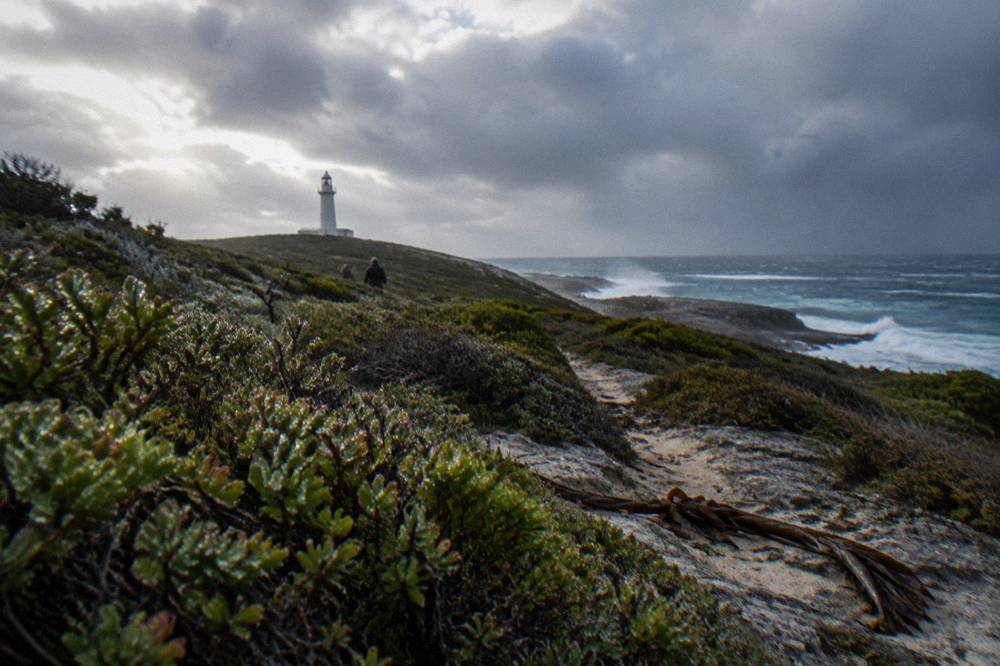
One coastal note that matters to riders: DBCA does not permit horse riding on beaches within Leeuwin-Naturaliste National Park, so no ride from this region's roster will take you along the capes' sand. The designated horse exercise beaches in the wider area sit around Busselton, covered in the beach horse riding in Western Australia guide. Margaret River's own rides are bush, forest and farm country, and they are better for it in winter, when the karri canopy keeps much of a shower off you.
Daylight Hours Through The Year
Margaret River's day length swings from about 9.9 hours at the June solstice to about 14.4 hours in December, because WA keeps no daylight saving. Sunrise shifts from 5:23 in mid-January to 7:23 in mid-July, which means winter rides start late and finish early, while October and November deliver long, bright evenings after a morning in the saddle.
This matters more for riders than for most visitors. A four or six hour ride in June has to fit inside a daylight window that closes before 17:20, while the same ride in November has light until nearly 19:00. Operators schedule accordingly, but if you are booking one of the long treks, the season effectively chooses your start time for you.
| Mid-month | Sunrise | Sunset | Notes |
|---|---|---|---|
| January | 05:23 | 19:34 | Longest practical riding days |
| March | 06:19 | 18:40 | Warm evenings, quick dawn |
| May | 07:04 | 17:27 | Window tightening |
| June | 07:23 | 17:17 | Shortest days, about 9.9 h of light |
| August | 07:00 | 17:49 | Slowly lengthening |
| October | 05:39 | 18:32 | Long bright evenings return |
| December | 05:03 | 19:27 | About 14.4 h of light |
The figures are computed for Margaret River's coordinates and hold to within a couple of minutes across the region, Rosa Brook included. The simplest planning rule: any ride longer than three hours is a morning booking from May to August, and a flexible one from October to March.
Whale Season And Wildflowers: The Spring Bonus
Whales pass through the region from late May to early December, one of Australia's longer seasons: Augusta's Flinders Bay carries the northbound humpbacks and southern right whales mainly May to August, while Geographe Bay's southbound humpbacks with calves run from about mid-September to early December. Wildflowers bloom roughly August to November, with October widely cited as the local peak.
Spring is when the region stacks its seasons on top of each other. An October or November visitor can ride a forest track through flowering heath in the morning and watch mother-and-calf humpback pods from a cape lookout in the afternoon, all in the same day and often in the same t-shirt. The South West carries more than 8,000 native plant species and around 300 orchid species, and the display moves south along the capes as spring progresses, so late-season visitors see the coast at its best.
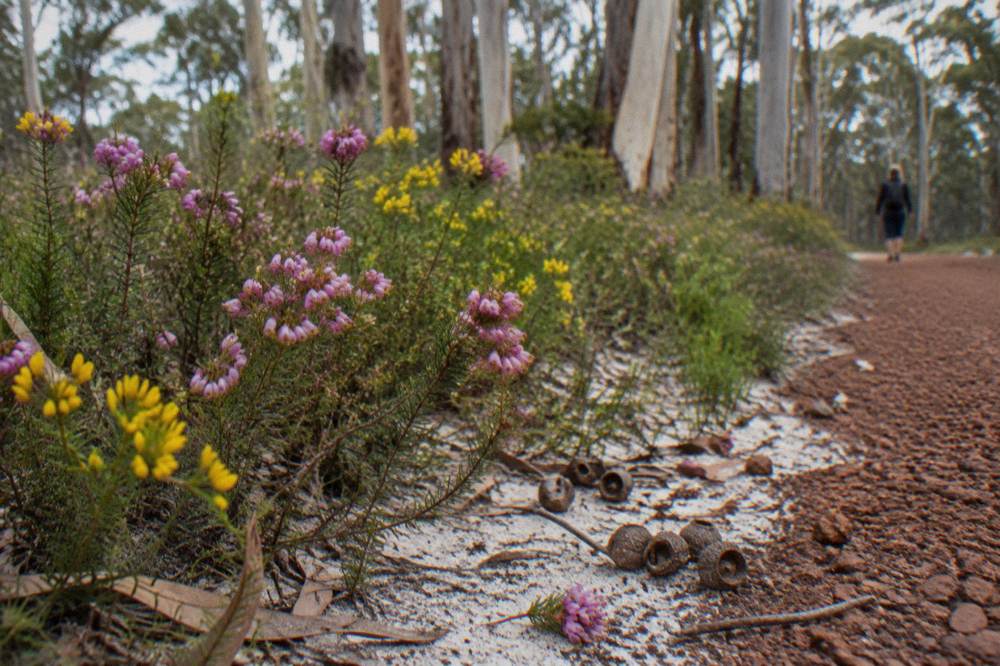
For riders this is the finest backdrop the region offers. The Little Grove ride, from AUD 95, runs through forest and bushland where kangaroos and birdlife are regular sightings, and the Boranup karri rides pass through the tallest forest in the southwest, which flowers late and holds its green well into December. Neither is a wildflower tour, but both put you inside the season rather than looking at it from a car window.
The best time to visit Margaret River for wildlife and seasons angle is covered further in the region guide, and the operator's own listing carries current ride availability through the shoulder season.
Bushfire Season And Park Alerts
The AFAC Seasonal Bushfire Outlook for spring 2026 flags above-average fire potential in the southern Jarrah Forest and Warren bioregions, which cover the Margaret River area, driven by heavy fuel loads and a developing El Nino. Total Fire Bans and high Fire Danger Ratings can restrict vehicle access in bushland, and parks may close on catastrophic days, so check alerts before booking a forest ride in the warmer months.
This is not a reason to avoid the region, but it is a reason to build a check into your planning. The live source for park closures and track alerts is the DBCA Park Alerts system, and no alerts were listed for the Margaret River region's parks. Prescribed burns are weather-dependent and decided day to day under DBCA's Burn Options Program, so a smoky morning can simply be a controlled burn some distance away rather than an incident.
The practical implications for riders are threefold. First, book forest rides with a little schedule slack in November and December rather than stacking them on your last day, so a rescheduled ride does not break the trip. Second, remember the operator's cancellation terms: more than 48 hours ahead incurs 25 percent of the booking, under 48 hours incurs the full amount, though a credit voucher is offered where possible. Third, on declared Total Fire Ban days, restrictions on engines and vehicles in vegetated areas can affect the logistics of moving horses, which is one reason operators watch the Fire Danger Rating daily through summer.
School Holidays And Crowd Timing
WA Term 4 runs 12 October to 17 December 2026, with summer holidays from 18 December to 31 January 2027 and Term 1 2027 starting 1 February. The Easter break falls 10 to 25 April 2027. Rides are busiest in these windows, and the operator's private rides are unavailable in school holidays and peak periods, so families should book early and travellers wanting quiet trails should aim outside them.
The holiday calendar shapes this region more than most, because Perth is only about three hours away and the south-west fills quickly in December and January. Accommodation prices follow the same curve. If your dates are flexible, the weeks immediately after Australia Day in late January and the mid-February to mid-March window are the quietest warm months of the year, with dry tracks, full daylight and none of the school-holiday rush.
| Period | Dates | What it means for riders |
|---|---|---|
| WA Term 4 2026 | 12 Oct to 17 Dec 2026 | Spring holidays at the start; book ahead |
| Summer holidays | 18 Dec 2026 to 31 Jan 2027 | Peak season, busiest trails |
| Term 1 2027 | 1 Feb to 9 Apr 2027 | Quietest warm months |
| Easter holidays | 10 to 25 Apr 2027 | Long-weekend demand around Good Friday 26 Mar and Easter Monday 29 Mar |
| Labour Day | Mon 1 Mar 2027 | Busy long weekend |
Term dates come from the WA Department of Education's published calendar at future term dates. Families riding with children should also note the minimum ages: most Jesters Flat rides start at age 10, while the Boranup Forest ride, the Canebrake ride and the 6-hour Conservation Park tour set the bar at 15, which rules them out for younger riders regardless of experience.
Which Rides Suit Which Months
Short bush and farm rides work year-round, since the 75-minute Country Lane ride and 90-minute options run in almost any weather with supplied wet-weather gear. Long forest treks suit October to April, when tracks are firmer; winter rides are still run but expect mud and slower going. Summer suits early-morning bookings, with 3 pm averages of 24 to 25 degrees inland, and the full-day rides are best in spring or autumn.
This is where the climate tables turn into a decision. The three short rides, from AUD 85 to AUD 95, are supplied with helmets, boots and wet-weather gear by the operator. The forest treks and full-day rides, from AUD 185 to AUD 480, are the ones the season should choose for you.
| Ride | Length | From (AUD) | Best months | Why |
|---|---|---|---|---|
| Country Lane Ride | 75 min | 85 | Any | Short, weather-tolerant, walk-only option |
| Introduction Ride | 90 min | 95 | Any | Beginner instruction plus bush, walk only |
| Little Grove Ride | 90 min | 95 | Aug to Nov | Forest green, wildlife active, winter camp fire |
| Boranup Forest Ride | 120 min | 260 | Oct to Apr | Karri tracks best when firm and dry |
| Wanderer Tour | 3 h | 185 | Oct to Apr | Extended trotting needs good footing |
| Irishmans Pool Ride | 3 h | 185 | Sep to Apr | Conservation park track, mostly walking pace |
| Blackwood Forest Ride | 4 h | 240 | Oct to Apr | Long forest-farmland loop, drier going |
| Canebrake Pool Ride | 4 h | 260 | Oct to Apr | River pool swim needs warmer water |
| Conservation Park Tour | 6 h | 380 | Spring, autumn | Long trots, needs cool dry days |
| Berry Farm Ride | 6 h | 400 | Oct to Apr | About 5.5 h in the saddle, cafe finish |
| Colonial Brewery Ride | 7 h | 480 | Oct to Apr | About 6 h riding, best in mild weather |
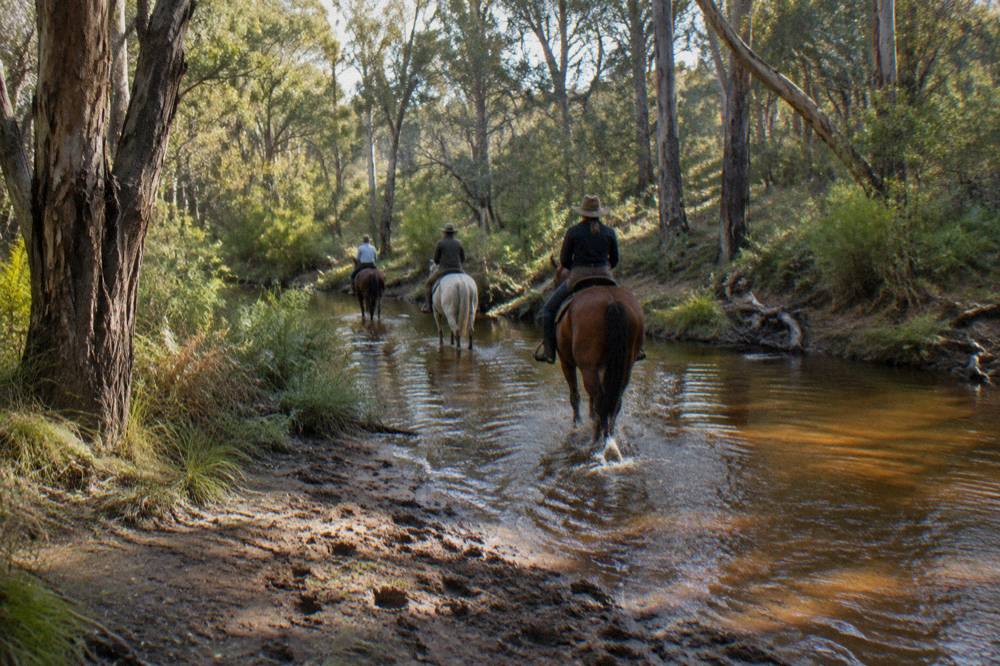
Two seasonal details are worth flagging. The Little Grove ride includes a winter camp fire after the ride, which turns a wet July afternoon into something to look forward to rather than endure. And the Canebrake ride's river-pool swim is weather permitting, which in practice means the warmer half of the year, so if the swim is part of the appeal, book it between November and April rather than mid-winter.
For first-time riders weighing the season against their confidence, the beginner horse riding guide explains how the Introduction ride's pre-ride instruction works, and the operator's live listing shows what is running in your week.
A Sample Year: How The Locals Time It
Locals ride most in October, November, March and April, the four months that combine firm tracks, mild temperatures and long daylight. They book the short rides in winter and the long treks in spring, and they treat December to February as early-morning riding season, on the trail by 8 am and back before the afternoon heat builds.
That pattern is worth copying even if your trip is short. A February visitor who books the Country Lane ride for 8:30 am gets a cool, bright track and the whole afternoon free for the coast, where the sea breeze cuts the heat. A July visitor who takes the same ride at midday gets soft winter light, a camp fire option on the Little Grove route, and the best whale-watching window of the year at Augusta, all without fighting a crowd.
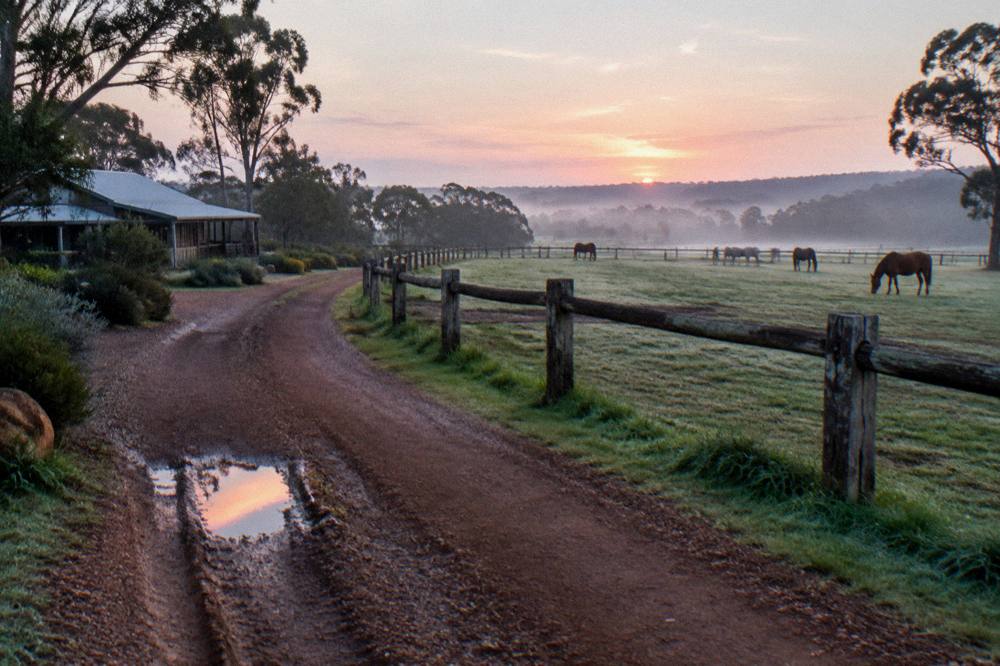
The other local habit is simply checking conditions the day before. Fire danger ratings, prescribed burn smoke and post-rain track state all change week to week, and a two-minute look at the DBCA alerts page or a call to the operator saves a wasted drive to Rosa Brook. Riders planning what to pack for any of these windows will find season-by-season clothing advice in the what to wear horse riding guide.
The Verdict By Traveller Type
Families with children over 10 should target October or the April school break; beginners suit any month but learn best in the mild shoulder season; experienced riders wanting long treks should book October to April; and whale-and-wildflower chasers want September to November. Budget travellers find the quietest prices in February and early March, and event-goers should plan around Pair'd in mid-November.
Every one of those recommendations is a trade-off, and the trade is usually weather against crowds. Spring gives you the region at its most beautiful and its busiest. Winter gives you empty trails, camp fires and the strongest southern right whale presence, at the cost of 19 rain days a month at the peak. Summer gives you guaranteed warmth, the beach culture and long evenings, at the cost of heat on open tracks and peak pricing.
The one genuinely bad time to book a long forest ride without flexibility is a declared high-risk fire day, and the one genuinely bad time to book anything without accommodation sorted is the 18 December to 31 January summer window. Everything else is negotiable, and the operator runs rides through all of it.
Whatever month you land on, the trio below covers the three most-booked formats: the karri forest flagship, the short countryside ride and the full-day river pool trek with lunch included.
Common Questions About The Best Time To Visit Margaret River
What Is The Best Month To Visit Margaret River?
October and November are the best months for most visitors: peak wildflowers, humpback whales with calves in Geographe Bay, daytime highs near 20 degrees and easing rain. March and April are the runners-up, with dry tracks and warm afternoons before the winter rain arrives.
What Is The Wettest Month In Margaret River?
July is the wettest month at the Witchcliffe station closest to the riding country, averaging 194.1 mm of rain over about 19 rain days. June is close behind at 179.7 mm. By October the average drops to 63.8 mm over about 9 days, leaving plenty of dry windows.
Can You Ride Horses In Margaret River In Winter?
Yes. The short rides run year-round and the operator supplies helmets, boots and wet-weather gear, and the Little Grove ride adds a winter camp fire after the ride. Expect muddier tracks and slower going on the longer forest treks, and book the shorter formats in June and July.
When Can You See Whales In Margaret River?
The regional season runs late May to early December. Augusta and Flinders Bay carry northbound humpbacks and southern right whales mainly May to August, while Geographe Bay carries southbound humpbacks with calves from about mid-September to early December, with October a strong month.
When Are The WA School Holidays?
Term 4 2026 runs 12 October to 17 December, summer holidays run 18 December 2026 to 31 January 2027, and Term 1 2027 runs 1 February to 9 April with the Easter break from 10 to 25 April. Rides are busiest in these windows, and private rides are unavailable in school holidays and peak periods.
Is Margaret River Too Hot In Summer For Riding?
Not for morning bookings. Summer 3 pm temperatures average 24 to 25 degrees inland at Witchcliffe, warmer than the coast, so experienced riders take the long treks early and use the afternoons for the coast. The short rides are manageable at most hours, and the forest routes hold shade through the middle of the day.