Can You Ride A Horse Anywhere In Australia?
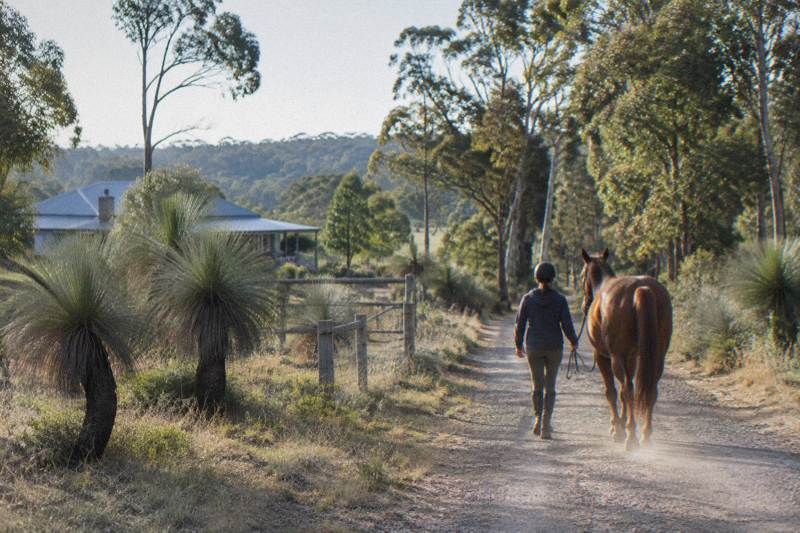
No, you cannot ride a horse anywhere in Australia. Access is governed by land managers: national parks, councils and private owners each set their own rules. Here is how it works, with the Margaret River region as the working example.
Can You Ride A Horse Anywhere In Australia?
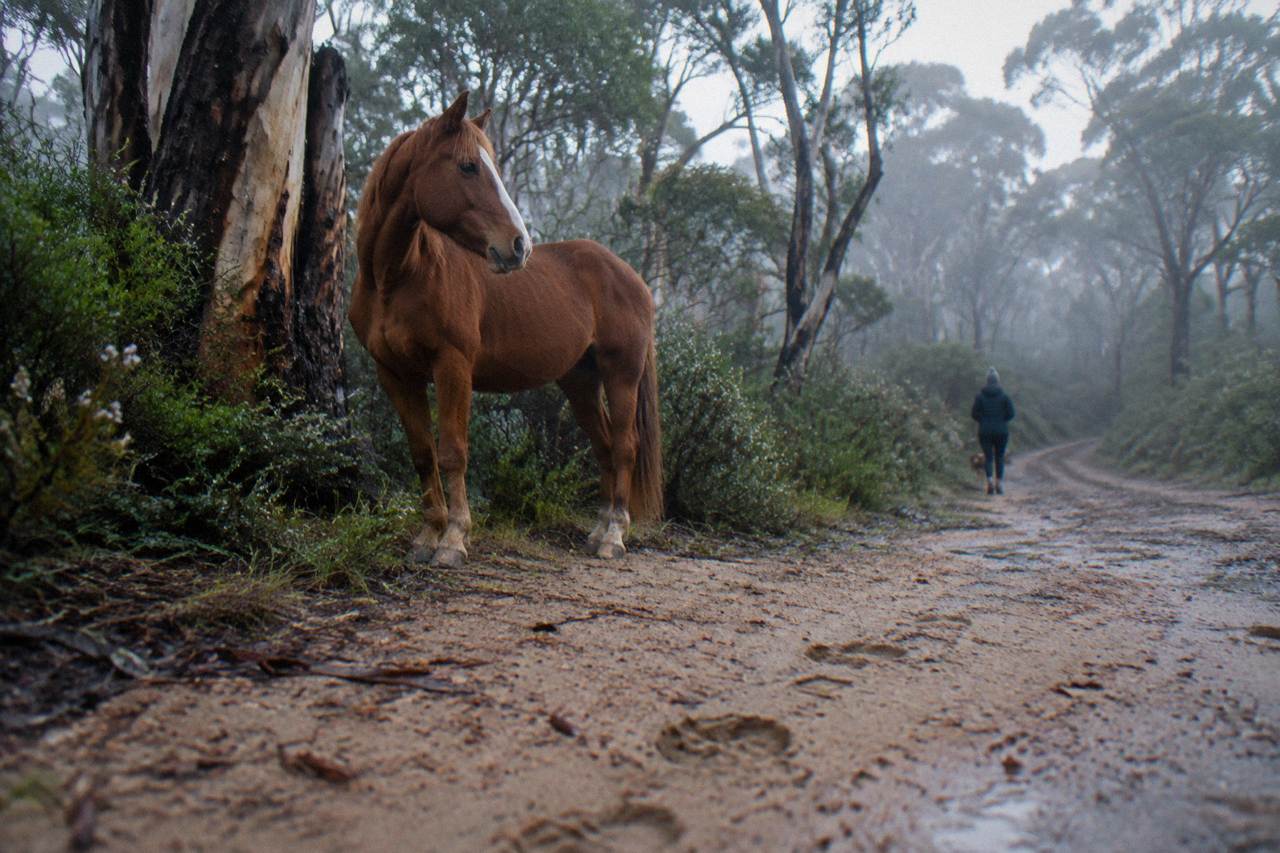
No, you cannot ride a horse anywhere in Australia. There is no national right of access for horses; every piece of ground is controlled by a land manager, whether that is a state parks agency, a local council, a traditional owner group or a private owner, and each sets its own rules. In practice, riding is limited to designated trails, council-approved beaches and private land with permission.
The question sounds simple and the answer is layered. Australia is a federation, and land management sits with the states, which then delegate or license day-to-day control to agencies, shires and leaseholders. There is no equivalent of a general bridleway network that a rider can assume exists. What looks like open bush is almost always a national park, a state forest, a pastoral lease or freehold farmland, and each category carries different rules about horses.
The pattern repeats across the country. In New South Wales, horses are allowed in some state forests and on some multi-use trails but excluded from most national park walking tracks. In Victoria, the Alpine National Park has a long tradition of horse riding on specific routes, while other parks in the same state prohibit it outright. Queensland, Tasmania and South Australia each draw their own lines. The one constant is that the rider has to check before loading the float.
The Margaret River region of Western Australia is a useful working example because the rules here are unusually clear, unusually local and, in one case, unusually specific about money. This article walks through those rules, then shows the simplest way around them.
Who Decides Where Horses Can Go?
Access is decided by whichever body manages the land: the state parks agency for national parks and reserves, the state forestry body for timber forests, the local council or shire for beaches and local reserves, and the owner for private property. No single authority can overrule another across a boundary, so a legal trail can become an illegal one mid-ride.
In Western Australia the key player for the Margaret River region is the Department of Biodiversity, Conservation and Attractions, usually called DBCA. It manages Leeuwin-Naturaliste National Park, the strip of coast and heathland that runs along the capes, and it decides what activities are permitted where. Its position on horses is specific: riding is not permitted on beaches within the national park, and horse riding is limited to designated inland trails such as those in Boranup Forest and trails south-east of Caves Road. The reasons given include fragile heath vegetation on access routes, nesting hooded plovers on the beaches and conflict with four-wheel-drive traffic. For the full picture of where you can and cannot ride in this corner of the state, the South West horseback riding guide covers the designated trails, beach rules and the best seasonal windows in one place.
Councils control the beaches and reserves outside the national park estate. The City of Busselton, immediately north of the Margaret River region, has used that power to formally designate two horse exercise beaches, with a penalty for riding outside them. The Shire of Augusta-Margaret River has not published an equivalent beach rule, which means riders should not assume either permission or prohibition there; the national park rule is the one that binds on most of the coast.
Private land is the third category and the simplest. With the owner's permission, a rider can do almost anything on private property, and a large share of all horse riding in Australia happens on farms and agistment paddocks that the public never sees. The guided-ride industry sits in this space too: operators run their own land and hold licences or access agreements for the public trails they use.
Where Can You Ride On Public Land In The Margaret River Region?
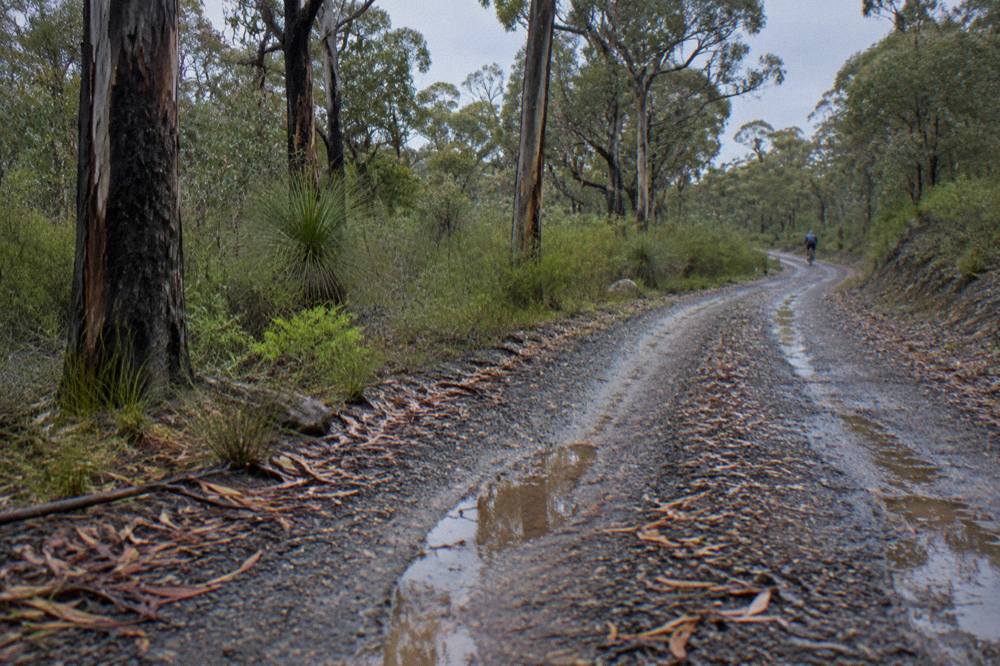
On public land around Margaret River, horses are allowed on designated inland trails in and around Boranup Forest and on trails south-east of Caves Road, and they are not allowed on Leeuwin-Naturaliste National Park beaches. The region's guided rides, including the karri forest and bushland treks, run on exactly these permitted corridors.
Boranup Forest is the flagship. It is the block of karri and jarrah forest south of Margaret River, inside the national park, and it is one of the inland areas where DBCA permits horse riding on designated trails. That is why the region's best-known forest ride exists at all: the 120-Minute Boranup Forest Ride from Jesters Flat, from AUD 260 per person, meets at the operator's Rosa Brook farm, about 18 km east of Margaret River town, and drives out to the karri forest before mounting up. It is graded intermediate to advanced, is not for beginners, and carries a minimum age of 15. If you want to know how Margaret River stacks up against other riding regions across the country, our guide to the best horse riding spots in Australia makes the case for putting it at the top of your list.
The rule structure matters for independent riders as much as for customers. A rider with a float and their own horse can legally use the same designated inland corridors, but they cannot cross from those corridors onto the capes beaches, and the heath between Caves Road and the ocean is off-limits rather than open. The official park page states that entry to Leeuwin-Naturaliste National Park is free, so there is no permit fee in the way, only the route restriction.
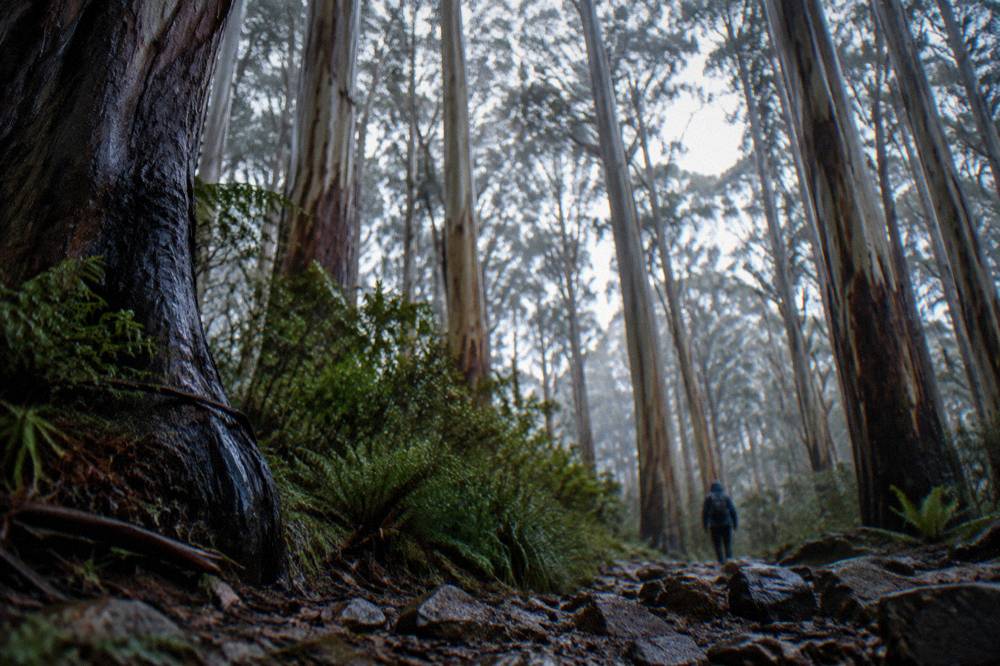
Fire adds a seasonal layer on top of the map. The spring 2026 bushfire outlook flags above-average fire potential for the southern Jarrah Forest and Warren bioregions, and on days of high fire danger or a declared Total Fire Ban, restrictions extend to vehicles and engine-powered equipment in bushland, which reaches all the way to trailering a horse into a forest access point. Closures and burns are published on DBCA's park alerts system, and it is the page to check the morning of any independent ride.
Which Beaches Allow Horses Around Busselton?
The City of Busselton officially designates two horse exercise beaches: Anniebrook, west of the Station Gully drain and running east for about 1.2 km, and Wonnerup East, from Forrest Beach Road north-east to the Shire of Capel boundary. Riding a horse on any other beach in the city's area risks a $200 penalty, and floats and vehicles are banned from the sand.
This is the clearest example in the region of a council using its land-management power to say exactly where horses may go. The two designated stretches sit on the calm Geographe Bay side, north of the capes and outside Leeuwin-Naturaliste National Park, which is why they can exist at all: the national park rule that keeps horses off the capes beaches does not apply to council-controlled foreshore. Dunes and vegetated areas are excluded from both designated zones, so riders stay on the wet sand.
The rules come with teeth. A $200 penalty applies to horse riding outside the two zones, and the ban on floats and vehicles on the beach means riders unload at designated access points and ride in. It is a structure that keeps horse use concentrated, predictable and away from nesting shorebirds, which is the same logic DBCA applies on the national park side of the boundary.
| Access type | Where it applies | Horses permitted | Key condition |
|---|---|---|---|
| National park beaches | Leeuwin-Naturaliste National Park capes coast | No | DBCA limits riding to designated inland trails |
| Designated council beaches | Anniebrook and Wonnerup East, City of Busselton | Yes | $200 penalty outside the two zones; no vehicles on the beach |
| Designated inland trails | Boranup Forest and trails south-east of Caves Road | Yes | Stay on the trail corridor; check alerts for closures and fire bans |
| Private farmland and bush | Rosa Brook and surrounding rural blocks | Yes, with owner permission | The basis of the region's guided-ride operations |
For visitors without their own horse, the practical reading of the table is simple: beach riding in this region means Geographe Bay, forest riding means the inland trails, and both are easiest to reach through an operator who already holds the access.
What About Riding On Your Own Or Private Land?
On private land, a horse may go anywhere the owner allows, and that covers most paddocks, farms and agistment properties across the country. On your own land the answer is almost unlimited, while on public roads the road rules treat a ridden horse as a vehicle, with the rider obliged to obey signals and keep to the left.
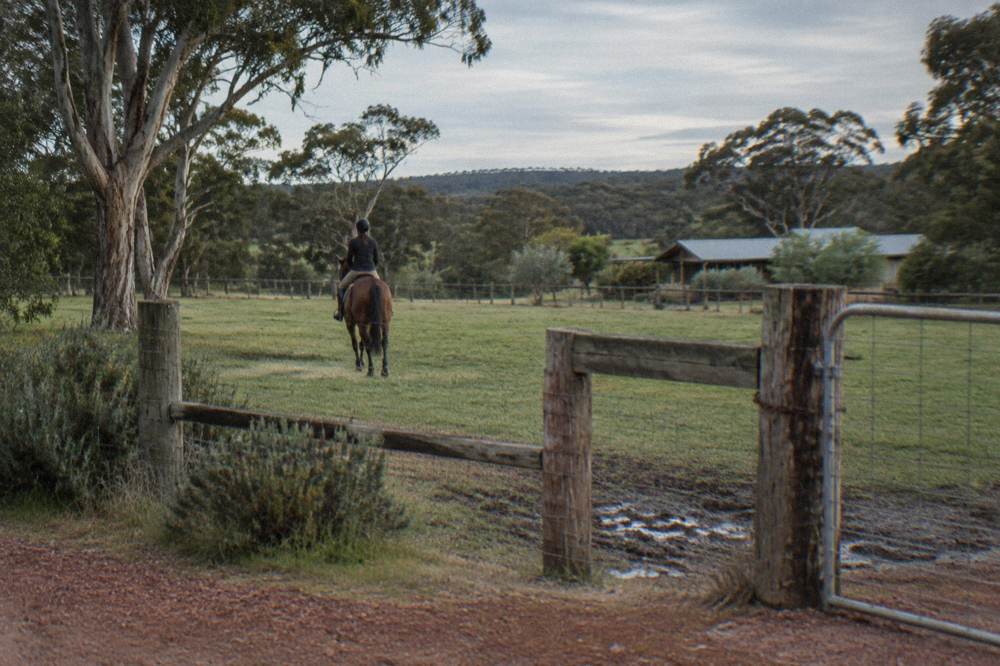
Private property is where the "anywhere" instinct mostly comes true. A landowner can ride their own paddocks, bush blocks and laneways without a permit, and this is why the great majority of Australian horses live and work on private land. It is also why the region's riding operators are based on farms: Jesters Flat runs its shorter rides from its own Rosa Brook property, and the 75-Minute Country Lane Ride, from AUD 85 per person with a minimum age of 10, is an escorted bush-track loop through that countryside with helmets, boots and wet-weather gear supplied.
Public roads are the in-between case. A ridden horse is treated as a vehicle under the road rules in every state, which means the rider must obey traffic signals, keep left, and ride in single file where required. Crossing between properties, connecting trails or reaching a beach access point by road is legal, but it is not a licence to roam.
The one thing no rider should do is treat unmarked bush as open access. Crown land, national park, state forest and pastoral lease all have managers, and "there was no sign" is not a defence. The safest assumption in every Australian state is the reverse of the question: you may ride nowhere by default, and somewhere by designation or permission.
Why A Guided Ride Is The Simple Answer
A guided ride solves the access problem in one step: the operator holds the permissions, knows the permitted corridors and the fire-day rules, supplies gear and matches horses to rider ability. In the Margaret River region that means Jesters Flat, which holds 4.9 from 325 TripAdvisor reviews and runs 11 bookable rides from its Rosa Brook farm.
Every rule in this article, the park boundaries, the designated trails, the two Busselton beaches, the fire-ban restrictions on vehicles, is research a visitor would have to redo from scratch. A local operator has already done it, holds the access agreements, and reroutes or postpones when DBCA declares a burn or a ban. The cancellation terms are published plainly too: more than 48 hours ahead, 25% of the booking is charged, and inside 48 hours the full amount, with a credit voucher where possible.
The choice of ride follows ability rather than scenery alone. The 120-Minute Boranup Forest Ride is the pick for confident riders who want the karri forest, while the 75-Minute Country Lane Ride suits beginners from age 10 at a walk and optional trot. For a longer day, the 3-Hour Wanderer Tour, from AUD 185 per person with a minimum age of 12, covers forest trails and requires riders to trot for extended periods.
Longer still, the Canebrake Pool Ride belongs with the forest treks rather than the full-day tier: Jesters Flat guides it over roughly four hours in the saddle, with the price on the live booking page. The full-day tier itself runs 6 to 7 hours, covering the Rapids Conservation Park Tour, The Berry Farm Ride and the Colonial Brewery Ride; book one of those and the drive down from Perth earns a proper lunch stop (see Lunch Stops Perth Drive). The weight limit across the roster is about 90 kg per the operator, with exceptions for experienced riders.
Planning around the calendar helps too. Spring brings the wildflower season, roughly August to November, with the region's local experts citing October as the peak, and the South West carries more than 8,000 native plant species including around 300 orchids, all visible from the saddle on the forest trails. School holidays fill the calendar fast: WA Term 4 runs 12 October to 17 December 2026, and the private ride option is unavailable in school holidays and peak periods. More timing detail is in the best time to visit Margaret River guide, and the horse riding for beginners in Margaret River guide covers first-ride preparation.
The honest summary for anyone asking whether they can ride anywhere in Australia: the country is criss-crossed with legal places to ride, but none of them are legal by default. The team at Margaret River Horse Riding compares the region's permitted rides so that the boundary-reading has already been done before the booking is made.
Common Questions About Riding Access In Australia
Can You Ride A Horse Anywhere In Australia?
No. Every piece of land in Australia has a manager, a state parks agency, a council, a leaseholder or a private owner, and each sets its own rules for horses. Riding is permitted only on designated trails, council-approved beaches and private land with the owner's permission.
Can You Ride Horses On Beaches In Western Australia?
Only on beaches where the land manager permits it. DBCA does not permit horses on beaches in Leeuwin-Naturaliste National Park, while the City of Busselton designates two horse exercise beaches, Anniebrook and Wonnerup East, with a $200 penalty for riding outside them.
Is Horse Riding Allowed In National Parks In WA?
It depends on the park. In Leeuwin-Naturaliste National Park, horses are limited to designated inland trails such as those in Boranup Forest and trails south-east of Caves Road. Entry to the park is free, but the trail restrictions still apply.
Do You Need A Permit To Ride A Horse On Public Trails?
For the designated inland trails around Margaret River, there is no entry fee for the national park and no permit fee for riding the permitted corridors. Conditions such as fire bans and closures still apply, and DBCA's alerts page is the place to check before an independent ride.
Can You Ride A Horse On The Road In Australia?
Yes, but a ridden horse is treated as a vehicle under the road rules in every state. The rider must obey traffic signals, keep left and follow the same rules as other road users, which makes road riding legal but only for connecting routes, not for roaming.
What Is The Easiest Way To Ride Legally Around Margaret River?
Book a guided ride. Jesters Flat runs eleven rides from its Rosa Brook farm on its own land and on permitted forest trails, from the 75-Minute Country Lane Ride at AUD 85 to full-day options with lunch included, with a weight limit of about 90 kg per rider.