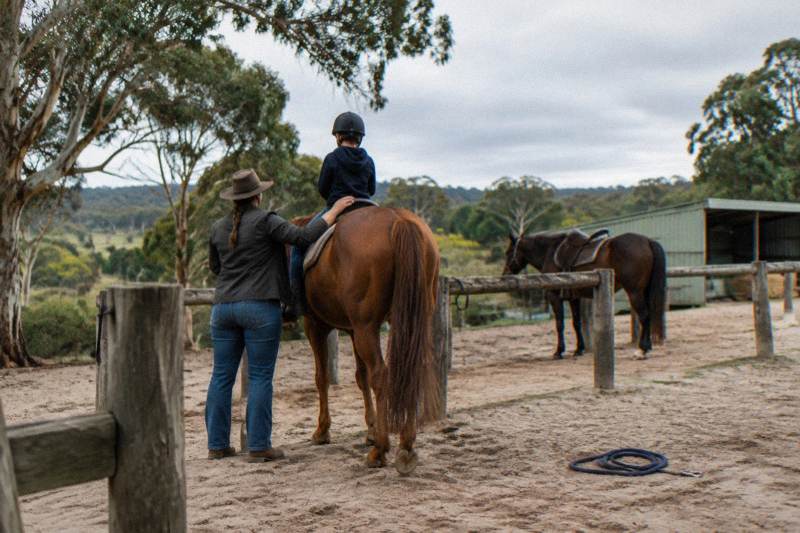
Can An 80kg Person Ride A Horse?
An 80kg rider is under the around 90 kg guide that applies to every Jesters Flat ride in Margaret River. Here is what the limit means, which rides suit an 80kg rider, and how fitness matters on the long treks.
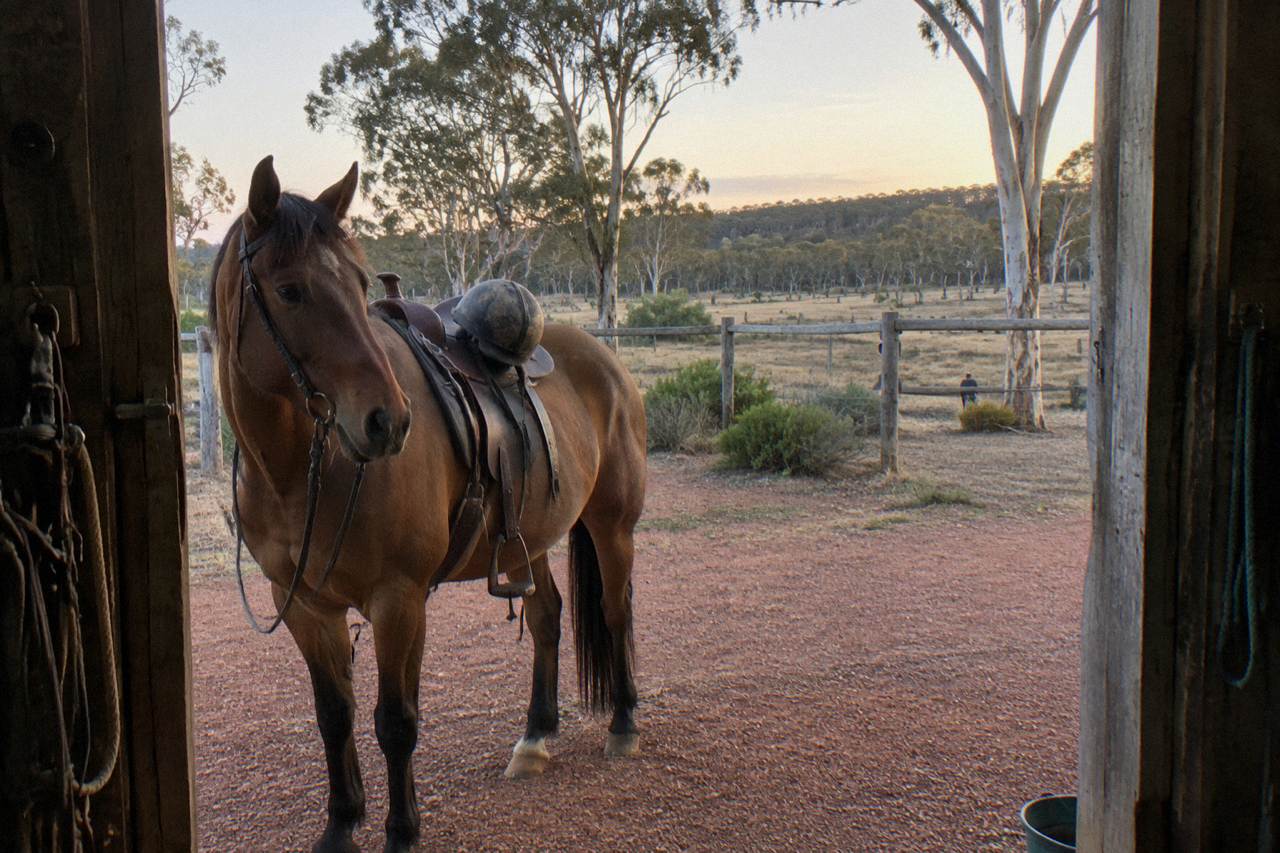
Can An 80kg Person Ride A Horse?
Yes. An 80kg person can ride a horse in Margaret River, because the region's trail riding operator, Jesters Flat at Rosa Brook, applies a guide of around 90 kg to every one of its eleven rides, and 80kg sits comfortably under it. Suitability is still the operator's call at booking, and riders close to any limit should say so upfront rather than arrive unannounced. Once your weight is sorted, the next question is usually price, and the guide to what an hour of horse riding in Margaret River actually costs covers that in detail.
That is the short answer for this region, and it is a more useful one than the generic internet debate, because here the question has a single, checkable number. Jesters Flat is the one operator in the Margaret River area that publishes a full priced roster of bookable trail rides, and its stated guide of around 90 kg applies across the board, from the 75-minute Country Lane Ride to the 7-hour Colonial Brewery Ride. The operator notes exceptions can be made for experienced riders, which we will come to, but the working figure for a first-time or casual rider is the 90 kg line. Age is the other question first-timers ask, and the guide to starting horse riding at thirty explains why it matters far less than people assume.
An 80kg rider therefore books like anyone else. The real questions shift from "am I allowed" to "which ride suits me" and "am I fit enough for the one I picked", because a 75-minute bush walk and a 6-hour trek through national park forest place very different demands on the same body. The weight guide is the entry gate, not the whole picture.
If you want to see how the local rides compare, the three below cover the spread an 80kg rider actually faces: a short countryside ride, a taught beginner experience, and a longer forest trek.
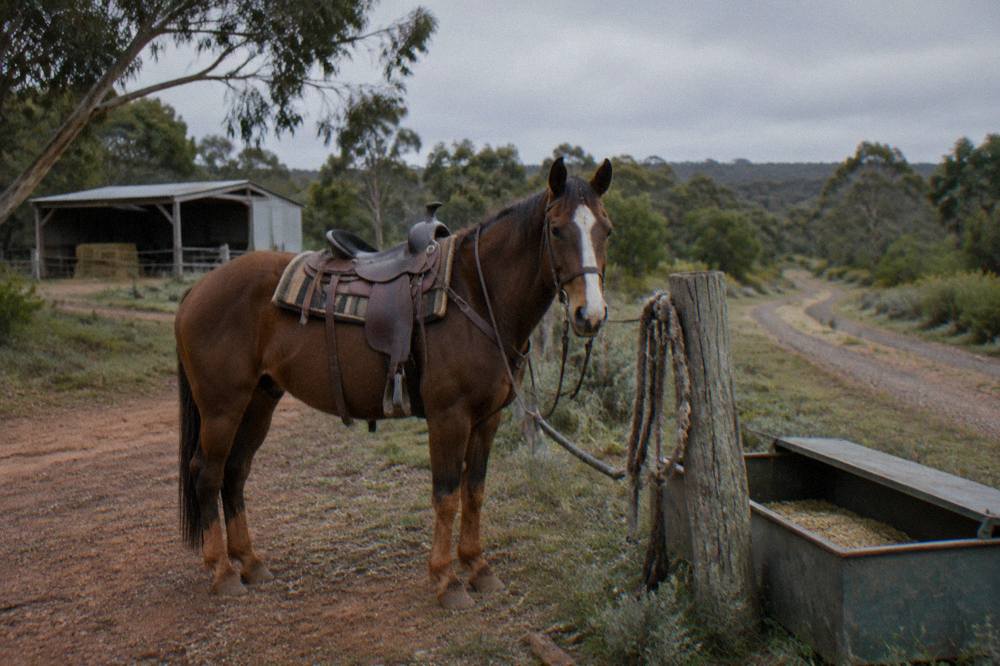
What Is The Weight Limit For Horse Riding In Margaret River?
The limit is a guide of around 90 kg per rider, set by Jesters Flat, the operator that runs all eleven bookable trail rides in the Margaret River region. It applies to every ride on the roster regardless of length or price, and the operator states exceptions may be possible for experienced riders. There is no separate heavier limit for longer rides, and no lighter limit for short ones. That fixed limit also lines up with a common welfare guideline, and the 20 percent rule for rider weight explains how the two compare.
The phrasing matters. Jesters Flat calls it a guide rather than a hard cutoff, and the operator's own tour pages carry the figure alongside each ride. That is why this article keeps saying "around 90 kg": the number is the operator's published working rule, and the honest position is that the operator makes the final suitability call when a booking comes in, not a website, and not a rider's own estimate.
Why does a limit exist at all? It comes down to the horse. A trail string is made up of stock horses and similar breeds carrying riders up and down forest tracks, often for hours at a time in warm weather. Operators set weight guides to protect the horses' backs and legs, to match riders to the right animals, and to keep the whole group safe when a horse has to absorb an unexpected movement, say a stumble on a root or a downhill section. A rider who is well within the guide is simply not a factor the guide needs to worry about.
At 80kg you have roughly 10 kg of headroom. That is enough that the number should never change which rides you consider. It is not so much headroom that you should ignore it either: if your weight fluctuates, or you plan to ride with a heavy camera pack or a thick wet-weather jacket, the honest move is to count the full loaded weight in your own head before you book.
The operator's full ride list and conditions are on the Jesters Flat tours and trails page, which is where the weight guide and each ride's minimum age are published. If you are booking and your weight is anywhere near the guide, mention it when you book. Operators would far rather match you to the right horse than discover the situation in the yard.
How Does Rider Weight Compare To Horse Weight?
A rider and tack should stay around or under 20% of the horse's weight, and an 80kg rider with a saddle sits comfortably under that line on a typical trail horse of the breeds used in a Margaret River string. That arithmetic is what operator weight limits are built on, which is why 80kg is unremarkable on a properly matched horse, though the 20% figure is a research guideline rather than a law.
The 20% rule is worth understanding because it turns an arbitrary-seeming limit into plain arithmetic. A trail horse in good condition carries a substantial fraction of its own bodyweight as a comfortable ceiling, and that ceiling has to cover the rider, the saddle, the saddle cloth and anything else on the horse's back. An 80kg rider with a stock saddle and gear lands well inside the range on the larger horses in a string, which is exactly what the operator's around 90 kg guide is calibrated to allow.
This site covers the arithmetic in more depth elsewhere, in the guide to the 20% rule in horseback riding, including why research puts the comfort threshold where it does and what happens above it. The short version: studies of horse physiology and gait have repeatedly landed near the 20% mark as the point where stride, back movement and heart rate start to change measurably under load.
What the 20% rule does not do is hand every 80kg rider a guarantee. It assumes the horse is the right size and condition for the job, the saddle fits, and the rider is reasonably balanced. A quiet, well-muscled trail horse carrying a balanced 80kg rider is doing normal work. The same horse carrying a rider who is unbalanced, or a horse that is smaller or older, changes the maths. This is exactly why operators reserve the final call for themselves, and why a weight guide is a guide.
For readers wondering where the line really falls in practice, we have also looked at the question from the lighter side of the debate, in whether a lighter rider is ever too heavy for a horse. The conclusion there is the same one that applies here: the number is almost never the issue at these weights, the match between rider, horse and ride type is.
Which Rides Can An 80kg Rider Book?
All eleven of them. Every Jesters Flat ride carries the same around 90 kg guide, so an 80kg rider is eligible for the full roster, from the AUD 85 Country Lane Ride to the AUD 480 Colonial Brewery Ride. What separates the rides for an 80kg rider is not weight, it is riding level, minimum age, and the fitness each trek demands.
The table below is the honest comparison. Weight never changes across the roster, so read the level and duration columns instead, and match those to your experience.
| Ride | Duration | From (AUD) | Level | Min age | Weight guide |
|---|---|---|---|---|---|
| 75-Minute Country Lane Ride | 75 min | 85 | Beginners to advanced | 10 | around 90 kg |
| 90-Minute Introduction Ride | 90 min | 95 | Beginners | 10 | around 90 kg |
| 90-Minute Little Grove Ride | 90 min | 95 | Beginners to advanced | 10 | around 90 kg |
| 1-Hour Private Ride | 1 hour | 165 | All levels, arranged | 10 | around 90 kg |
| 120-Minute Boranup Forest Ride | 120 min | 260 | Intermediate to advanced | 15 | around 90 kg |
| 3-Hour Wanderer Tour | 3 hours | 185 | Intermediate to advanced | 12 | around 90 kg |
| 3-Hour Irishmans Pool Ride | 3 hours | 185 | Strong beginner and up | not stated | around 90 kg |
| 4-Hour Blackwood Forest Ride | 4 hours | 240 | Intermediate to experienced | not stated | around 90 kg |
| 4-Hour Canebrake Ride | 4 hours | 260 | Novice to advanced, able to trot | 15 | around 90 kg |
| 6-Hour Conservation Park Tour | 6 hours | 380 | Experienced, good fitness | 15 | around 90 kg |
| 6-Hour Berry Farm Ride | 6 hours | 400 | Intermediate to advanced | not stated | around 90 kg |
| 7-Hour Colonial Brewery Ride | 7 hours | 480 | Intermediate to advanced, good fitness | not stated | around 90 kg |
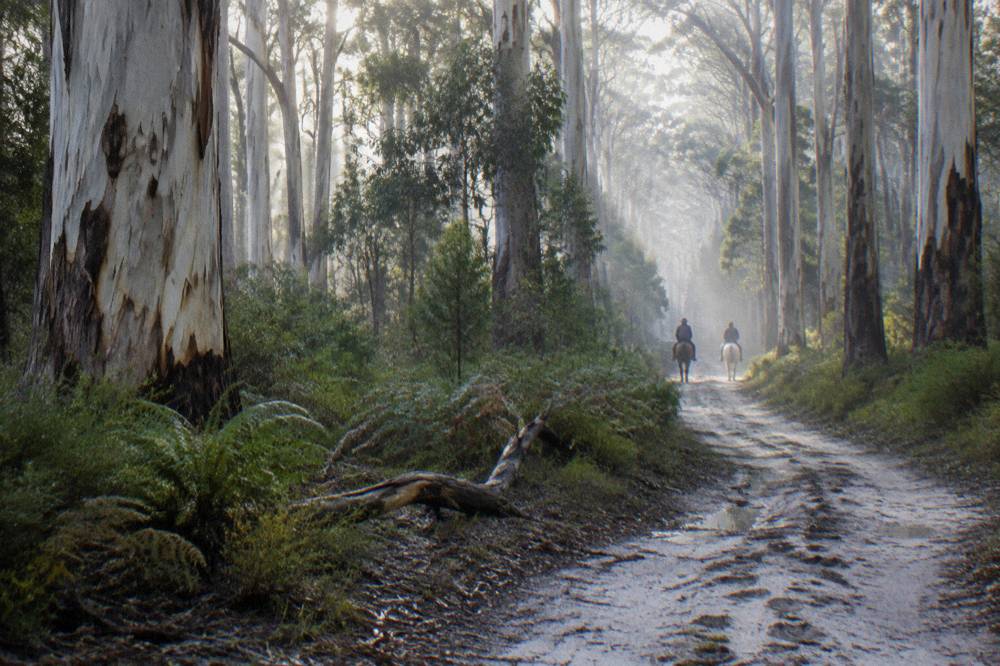
A few patterns stand out. The short rides, the Country Lane, Introduction and Little Grove options, are open to beginners and carry a minimum age of 10, which makes them the natural first booking for an adult who has not sat on a horse since childhood. The mid-length forest treks step up to intermediate and above, and several require the ability to trot for extended stretches. The full-day rides are a different category of day out entirely, and we will deal with their demands separately.
For a first ride back in the saddle, the taught beginner experience is the one that removes the guesswork, because the instruction happens before the bush ride starts rather than on it.
The 90-Minute Introduction Ride runs from AUD 95 per person and is built for exactly this case: basic safe-riding instruction first, then a relaxed walk-only bush ride. The operator's FAQ states the ride is walk only, which matters for a nervous returner, because nothing will be asked of you that was not taught in the yard first. At 80kg you book it under the same guide as everyone else on the string.
Do The Long Rides Need More Than A Weight Number?
Yes. The 6 and 7-hour rides list "good fitness" as part of their level description, and the 7-hour Colonial Brewery Ride involves about 6 hours in the saddle. Weight eligibility and physical preparedness are different things, and an 80kg rider who clears the guide still has to honestly assess stamina, core strength and comfort at trot before booking a full day.
This is the part of the question the weight debate usually skips. Six hours on a horse is not six hours of sitting down. It is sustained low-level work for the rider's core, inner thighs, hips and lower back, punctuated by trotting sections that ask for more. The Colonial Brewery Ride, from AUD 480, includes a light lunch at Canebrake Pool, refreshments at the Colonial Brewery and a bus back, with about 6 hours of actual riding. The 6-Hour Berry Farm Ride, from AUD 400, runs about 5.5 hours in the saddle with opportunities to trot and canter, finishing with afternoon tea at the Berry Farm cafe.
The mid-length treks sit in between. The 3-Hour Wanderer Tour, from AUD 185, states riders must be able to trot for extended periods, which is a stamina statement as much as a skill one. The 4-Hour Blackwood Forest Ride includes a short property check ride, a 15-minute truck drive and about 3.5 hours riding back toward Jesters Flat, with a commuter bus option for non-riders in the group.
The honest self-test is simple. Could you comfortably walk briskly for three hours, hold a stable posture while doing it, and get up off the ground without using your hands? If yes, the full-day rides are realistic. If the answer is no, the 75-minute to 3-hour rides deliver the same forest and farmland scenery with a fraction of the physical load, and nobody should treat that as a lesser day out.
For riders with some miles behind them, the 3-hour forest trek is the natural step up from the short rides, and it is the one that rewards a decent trot.
The Wanderer Tour, from AUD 185 per person, suits intermediate to advanced riders from age 12 and spends about 3 hours in the forest. It is the ride where the extended trotting requirement is stated outright, so an 80kg rider with riding history gets a genuine working ride rather than a nose-to-tail walk.
What If A Rider Weighs More Than 90kg?
The operator states exceptions to the around 90 kg guide can be made for experienced riders, so being over the line is not automatic exclusion, but it is the operator's decision, made case by case at booking. There is no published higher limit, no published fee, and no guarantee. The honest advice is to contact the operator directly before planning the day around a ride.
This is where candour beats optimism. The exception is worded for experienced riders, and the reasoning follows from the 20% arithmetic above: an experienced rider balances with the horse, moves in the saddle, and loads the animal's back far less than a beginner of the same weight. An operator may match such a rider to the biggest, quietest horse on the string. A nervous first-timer above the guide is a different conversation, and the answer may simply be no, because the operator is balancing the horse's welfare, the rider's safety and the rest of the group.
The practical steps are the same either way. Contact the operator by email or phone before booking, state the actual number honestly, and mention your riding experience. The private ride, from AUD 165 per hour, is arranged directly with the operator by email or phone anyway, though note it is unavailable in school holidays and peak periods, so an over-the-guide rider asking about a one-to-one arrangement is already following the right channel.
What you should not do is book online and hope the check ride in the yard goes unremarked. Operators weigh and assess riders when they need to, a refused rider at the farm gate has usually driven an hour to get there, and the cancellation terms tilt against late changes: more than 48 hours ahead and 25% of the booking is charged, under 48 hours and 100% is charged, with a credit voucher where possible. Early honesty is cheaper in every sense.
It is also worth knowing that the weight conversation in this region is not a regulatory one. There is no state law setting a rider weight limit; the guide is the operator's own welfare and safety policy, applied to its own horses. The public land the rides cross is managed by the Department of Biodiversity, Conservation and Attractions, whose live park alerts for the South West are at the DBCA alerts page, but that system covers closures and burns, not rider weight.
How Should An 80kg Rider Prepare For A Margaret River Ride?
Book the ride that matches your level, state your weight if it is anywhere near the guide, arrive early, and wear long pants and closed shoes, since helmets, boots and wet-weather gear are supplied by the operator. Check the park and fire conditions on the day, because spring in the South West carries prescribed burns and occasional high fire danger that can affect trail access.
Preparation for an 80kg rider is the same as for anyone else, which is the point of the whole answer. The gear list is short because the operator supplies the safety-critical items: a helmet, boots and wet-weather gear are included on the short rides per the operator's FAQ. Long pants and closed shoes on your side, sunscreen and a water bottle, and you are equipped.
Timing is worth a thought. October sits in peak wildflower season in the Margaret River region, with the local tourism body citing October as the month when purples, reds, yellows and pinks overlap in the coastal heath and forests, so a spring ride doubles as a wildflower tour (see Free Things To Do). The trade-off is that spring is also when DBCA runs much of its prescribed burning program, weather dependent and decided day-of, and the AFAC spring outlook has flagged above-average fire potential in the southern Jarrah Forest and Warren bioregions that cover this part of the South West. None of this changes a rider's weight, but it is why checking alerts before a drive out to Rosa Brook is a good habit.
School holidays matter for a different reason. WA Term 4 runs from 12 October to 17 December 2026, and the summer holidays run 18 December 2026 to 31 January 2027. The private ride is unavailable in school holidays and peak periods, and holiday weeks are busier across the roster generally, so booking ahead in those windows is sensible.
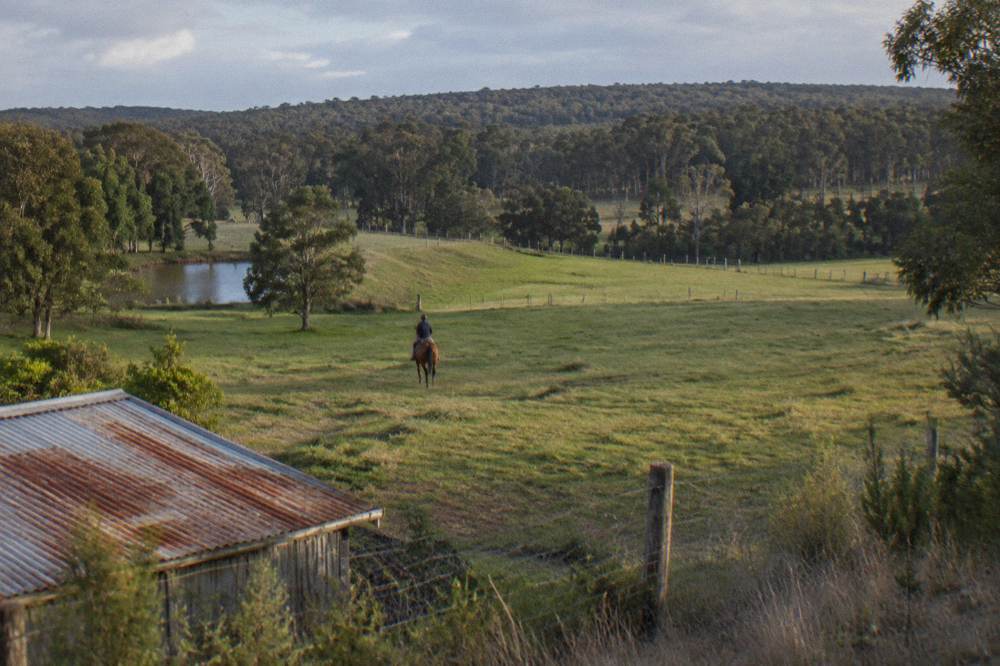
For a first booking, the short countryside ride is the one most 80kg riders land on, and it is the ride this site features alongside this article. The 75-Minute Country Lane Ride runs from AUD 85 per person, suits beginners to advanced riders from age 10, and includes the opportunity to trot with walk-only always allowed. It is the ride that answers the weight question in practice: you arrive, you are matched to a horse, and the number stops mattering within the first five minutes.
If you are planning a wider trip around the region, the rides pair naturally with the other outdoor draws, and Margaret River Horse Riding exists to make that planning straightforward, from beach riding rules in Western Australia to what to wear on a ride.
To close, here are the three rides that between them cover an 80kg rider's realistic choices: the short countryside ride, the taught beginner experience, and the 3-hour forest trek.
Common Questions About An 80kg Rider On A Horse
Can An 80kg Person Ride A Horse?
Yes. The Margaret River region's trail riding operator, Jesters Flat, applies a guide of around 90 kg to every ride on its roster, and 80kg sits under it. Suitability is the operator's call at booking, so an 80kg rider simply books the ride that matches their level.
Is 80kg Too Heavy For A Beginner Ride?
No. The beginner-rated rides, including the 75-Minute Country Lane Ride from AUD 85 and the 90-Minute Introduction Ride from AUD 95, carry the same around 90 kg guide as the advanced treks. A beginner's balance matters more to the operator than a weight that is 10 kg under the line.
What Is The Weight Limit For The Long Rides?
The same around 90 kg guide applies to the 6 and 7-hour rides as to the short ones. What separates the long rides is not weight but the level and fitness stated on each, with the 7-hour Colonial Brewery Ride involving about 6 hours in the saddle and listing good fitness as a requirement.
Can A Rider Over 90kg Still Ride In Margaret River?
Possibly. The operator states exceptions to the around 90 kg guide can be made for experienced riders, decided case by case. There is no published higher limit or guarantee, so the only honest route is to contact the operator directly before booking.
Does Rider Weight Include Gear And Clothes?
The operator's guide is stated as a per-rider figure of around 90 kg. A practical approach is to count yourself plus anything heavy you will carry or wear on the ride, and if the total is near the guide, mention it at booking so the operator can match you to the right horse.