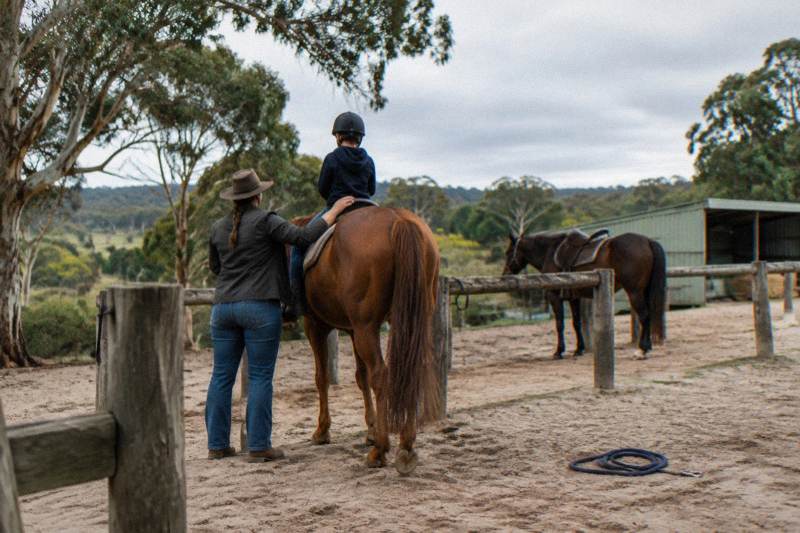
What Is The 20% Rule In Horseback Riding In Margaret River?
The 20% rule is the widely quoted guideline that rider plus tack should stay at or under about 20 percent of the horse's weight. Here is what it means, how Jesters Flat's 90 kg limit relates to it, and which Margaret River rides suit which riders.
What Is The 20% Rule In Horseback Riding?
The 20% rule is a widely quoted rule of thumb that says the rider, plus tack, should weigh no more than about 20 percent of the horse's own bodyweight. It is not a regulation, and it is not backed by a single definitive study, but it is the number most instructors and trail operators reach for when deciding whether a horse can carry a person in comfort. In Margaret River, that translates to a guide limit of about 90 kg. If you weigh around seventy kilos and are unsure where that leaves you, the guide to whether 70 kg is too heavy to ride a horse explains how the operator limit and ride terrain apply to you.
The rule works because it scales. A small, compact horse carries less total weight than a big, solidly built one, even though the percentage stays the same. That is why you will rarely see a professional outfit publish a percentage on its booking page: percentages are hard to check at the trail head, kilograms are not. The percentage becomes a number, and the number becomes the gate you actually meet on the day.
It is worth being clear about what the rule is not. It is not a hard safety threshold where anything above 20 percent is dangerous and anything below is fine. A horse's conformation, fitness, the terrain, the pace and the length of the ride all change what a given horse can carry comfortably. A short, slow walk ride on flat bush track asks far less of a horse than three hours of trotting through sand, even with the same rider up.
What the rule does is set a sensible ceiling that protects horses from cumulative strain and keeps riders honest with themselves. Carrying weight is work, and like any working animal, a horse that is routinely overloaded will show it in its back, its legs and its temperament long before anything dramatic happens. Operators who enforce a limit are not being difficult, they are running a sustainable string of horses.
The concept travels well beyond this region. If you are weighing up the question for yourself, the companion pieces is 70kg too heavy to ride a horse and can an 80kg person ride a horse break the same maths down for specific rider weights, and both land on the same conclusion: for most mid-sized horses, most adult riders sit comfortably inside the guideline.
Where Does The 90 kg Limit Come From?
Jesters Flat, the operator that runs the guided trail rides from Rosa Brook about 20 minutes east of Margaret River town, applies a guide limit of about 90 kg across its roster, with exceptions possible for experienced riders. That figure is the 20% rule translated into a number a booking desk can actually use: roughly what a typical trail horse in their string can carry in tack and rider across bush and forest terrain, day after day. If you're close to that ceiling and wondering where you stand, our guide to riding at 80kg on a Margaret River trail horse explains which treks fit and how rider fitness comes into play.
Why 90 and not 100 or 85? Because the operator's horses are working animals doing multiple rides, and the limit reflects the whole string rather than the single biggest horse in the paddock. A one-off ride on the largest horse might be fine at more, but a business cannot schedule around its one strongest animal. The limit is set so every horse on every ride stays inside the comfort zone.
The exceptions clause matters and is often missed. The operator notes that experienced riders may be accommodated above the guide limit in some cases, and this is where the 20% logic shows its flexibility. An experienced rider rides in balance, moves with the horse, distributes weight through the stirrups and does not bounce. A nervous beginner does none of those things, and the same kilograms feel very different underneath. If you are above 90 kg and have real riding hours behind you, it is worth asking the operator directly rather than assuming a flat no.
It also helps to understand that the limit is not about the horse collapsing. It is about welfare economics: sore backs shorten careers, and a trail business lives and dies by horses that stay sound and willing for years. The limit protects the rider's experience too, because a comfortable horse is a safer, calmer horse.
How Does The 20% Rule Play Out On Margaret River Rides?
The 20% rule shows up at Margaret River as a fixed 90 kg guide limit on every Jesters Flat ride, but what really tests the rule is the ride itself: a 75-minute walk-and-trot bush outing demands far less of horse and rider than a 6-hour forest trek, so the same rider can sit comfortably within the guideline on one ride yet be marginal on another.
The roster splits into three families. Short rides of 75 to 90 minutes run through bush and countryside and suit beginners through to advanced riders, from AUD 85 to AUD 95 per person. Forest treks from 2 to 4 hours move into karri and Whicher forest country and demand more from both ends of the reins. Full-day rides of 6 to 7 hours, from AUD 380 to AUD 480, are for intermediate and experienced riders with genuine fitness, because around 5.5 to 6 hours of that is spent in the saddle.
Here is how the weight and experience guidance stacks up across the roster. The operator does not state a minimum age on every ride, and where it does not, that is noted rather than guessed.
| Ride | Duration | Level | Min age | Guide limit |
|---|---|---|---|---|
| 75-Minute Country Lane Ride | 75 min | Beginners to advanced | 10 | About 90 kg |
| 90-Minute Introduction Ride | 90 min | Beginners | 10 | About 90 kg |
| 90-Minute Little Grove Ride | 90 min | Beginners to advanced | 10 | About 90 kg |
| 1-Hour Private Ride | 1 hour | All levels, arranged with operator | 10 | About 90 kg |
| 120-Minute Boranup Forest Ride | 120 min | Intermediate to advanced, not for beginners | 15 | About 90 kg |
| 3-Hour Wanderer Tour | 3 hours | Intermediate to advanced | 12 | About 90 kg |
| 3-Hour Irishmans Pool Ride | 3 hours | Strong beginner and up | Not stated | About 90 kg |
| 4-Hour Blackwood Forest Ride | 4 hours | Intermediate to experienced | Not stated | About 90 kg |
| 4-Hour Canebrake Ride | 4 hours | Novice to advanced, able to trot | 15 | About 90 kg |
| 6-Hour Conservation Park Tour | 6 hours | Experienced, good fitness | 15 | About 90 kg |
| 6-Hour Berry Farm Ride | 6 hours | Intermediate to advanced | Not stated | About 90 kg |
| 7-Hour Colonial Brewery Ride | 7 hours | Intermediate to advanced, good fitness | Not stated | About 90 kg |
Read the table as a matching exercise rather than a barrier. If you are near the limit and new to riding, the short countryside rides are the honest choice: the pace is mostly walking with an opportunity to trot, the terrain is gentle, and the horse's workload stays low. The operator supplies safety helmets, boots and wet-weather gear on the short rides, so the only variable you bring is yourself. Push toward the longer forest treks and the same rider weight is being carried over sand, through hills and across hours of trotting, which is a different ask of the animal entirely.
The 120-minute Boranup Forest Ride is the clearest example of the second gate. It is listed as not for beginners, minimum age 15, because two hours in karri forest at an intermediate pace assumes a rider who can stay balanced without constant instruction. Weight is one filter; competence is the other, and the roster applies both.
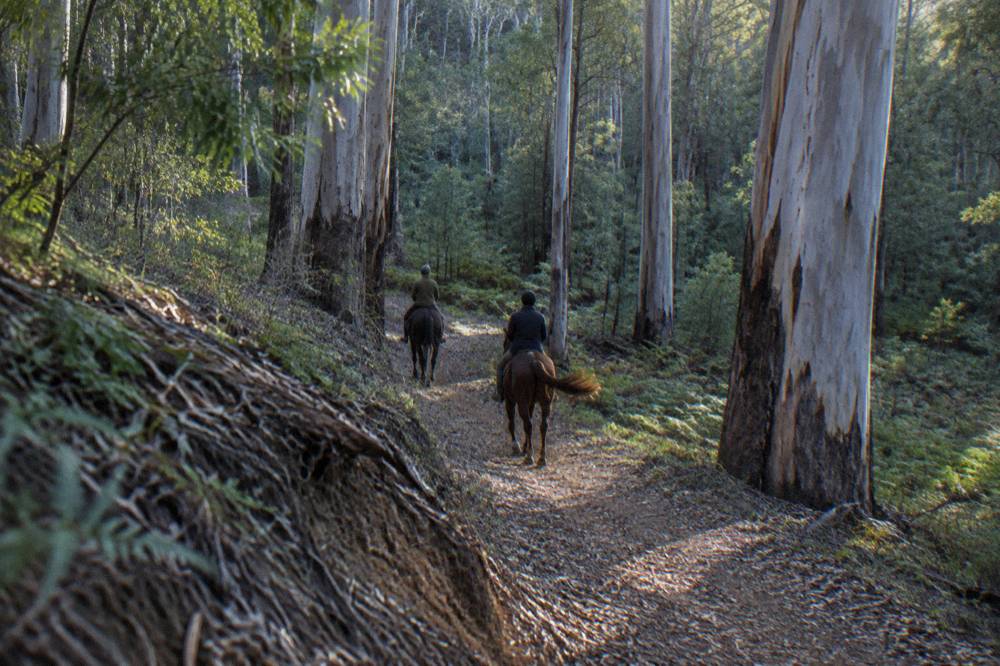
For a fuller picture of the local options, the Margaret River trail rides guide covers the whole roster by terrain, and the beginner horse riding in Margaret River guide explains which rides assume zero experience. The parks service confirms entry to Leeuwin-Naturaliste National Park is free, so the only cost on these rides is the ride itself.
What If You Are Heavier Than The Limit?
If you weigh more than the stated limit, contact the operator before booking rather than after. There is no published upper number, no heavier-rider tariff and no guarantee, and the worst outcome is arriving on the day and being declined at the property. A direct conversation, with your riding experience stated plainly, is the only route that respects both you and the horse.
The distinction the operator draws is between weight and load. Load is what the horse actually experiences: a balanced rider with years in the saddle can present less of a load than an unbalanced rider who grips with the knees and slams the horse's back at every step. This is why the exception clause exists for experienced riders, and it is also why it is not a loophole. Overstating your experience to fit under the exception is the fastest way to end a horse's working week.
If the answer on the day is no, there are still ways to enjoy the region on horse terms. Watching a ride depart from the property, or booking a non-riding spot, is a real option on some longer rides: the 4-hour Blackwood Forest Ride includes a commuter bus for non-riders, which means a travelling companion can come along without riding. The region also has plenty of other ways to meet horses, and other operators such as The Horse Resort and The Humble Horse exist locally, though they publish no rides or prices to compare here.
The practical planning advice is simple. Weigh yourself honestly, add what you will carry in pockets, read the ride's level rating before anything else, and email the operator with both numbers. The operator holds 4.9 from 325 TripAdvisor reviews, and a business with that standing is not declining riders for fun. It is declining bookings it cannot safely and fairly put on a horse.
For context beyond the trail, the City of Busselton designates specific horse exercise beaches and applies fines for riding outside them, which shows how seriously local authorities take horse welfare and access rules; the detail is on the City of Busselton's horse information page. The same principle runs through everything: rules around horses exist to keep horses usable, and weight limits are part of that picture.
Does Riding Fitness Matter More Than Weight?
On the longer Margaret River rides, fitness matters more than weight. The full-day rides require intermediate to advanced riding ability and good fitness, with roughly 5.5 to 6 hours in the saddle, and no weight reading changes that. A light rider who cannot post a trot will struggle on a 6-hour ride, while a heavier, fitter, experienced rider may be fine on a 3-hour one.
The roster's own descriptions make the fitness demands explicit. The 3-Hour Wanderer Tour requires riders who can trot for extended periods. The 6-Hour Conservation Park Tour is listed for experienced riders with good fitness and offers scope for long trots and canters. The 7-Hour Colonial Brewery Ride, from AUD 480 per person, includes a light lunch, refreshments at the brewery and a bus back, but around 6 hours of it is riding. None of these are tests of strength, they are tests of endurance and balance, and balance is exactly what keeps a horse's back comfortable.
This is where the 20% rule earns its status as a rule of thumb rather than a law. The percentage ignores how the weight is carried. A rider who moves with the horse, keeps their seat light and rides in rhythm distributes load across the saddle in a way a stiff, braced rider does not. That is invisible on any scale, which is why operators pair a weight limit with an experience rating on every ride and why the two columns in the table above exist side by side.
If you are planning a first ride or returning after years away, start short. The 90-Minute Introduction Ride from AUD 95 includes basic safe-riding instruction before a walk-only bush ride, which is the roster's way of teaching the balance that makes everything after it possible. The what to wear horse riding in Margaret River guide covers the clothing side of the same equation.
One more planning note that belongs here and nowhere else in this article: the operator's cancellation terms charge 25 percent of the booking when you cancel more than 48 hours ahead, and the full amount inside 48 hours, with a credit voucher where possible. Booking early to secure a spot, then needing to change your mind, is the most common way riders lose money on these rides, so confirm your weight, fitness and date before you pay.
Common Questions About The 20% Rule In Horseback Riding
What Is The 20% Rule In Horseback Riding?
It is a rule of thumb that rider plus tack should stay at or under about 20 percent of the horse's weight. It is not a law or a regulation, and there is no single definitive study behind the exact figure, but it is the guideline most operators and instructors use to keep horses comfortable. In Margaret River it surfaces as the operator's guide limit of about 90 kg.
Is The 20% Rule A Legal Requirement In Australia?
No. It is a widely quoted guideline, not legislation, and no Australian state regulates rider weight by percentage. Individual operators set their own limits as booking conditions, and in this region Jesters Flat applies a guide limit of about 90 kg with exceptions possible for experienced riders.
Why Is The Margaret River Weight Limit About 90 kg?
Because the operator translates the percentage into a number its whole string of trail horses can carry comfortably across bush and forest terrain, day after day. A booking desk cannot weigh a horse and a rider as a ratio on the morning of a ride, so the percentage becomes a fixed guide limit. Exceptions for experienced riders exist because balanced riders present less load than the scale suggests.
Can I Ride If I Weigh More Than 90 kg?
Possibly, but only by arrangement. The operator notes exceptions for experienced riders, assessed case by case, and there is no published upper figure. Contact the operator before booking, state your riding history honestly, and expect that the answer may depend on which horse is available and which ride you want.
Does The Limit Change Between Short Rides And Full-Day Rides?
The published guide limit of about 90 kg applies across the whole roster, from the 75-minute Country Lane Ride to the 7-hour Colonial Brewery Ride. What changes is the experience and fitness required: the full-day rides ask for intermediate to advanced ability and good fitness, with around 5.5 to 6 hours in the saddle, so the ride profile matters as much as the weight gate.
Does Tack Count Toward The 20%?
Yes, in the standard formulation the weight of the saddle and gear counts alongside the rider, which is one reason operators keep trail tack light and why the rider-facing limit sits a little below the raw percentage calculation. The Margaret River operator supplies helmets, boots and wet-weather gear on its short rides, and those wearable items do not sit on the horse's back the way a saddle does.
The 20% rule survives because it is simple enough to remember and sensible enough to be true. Margaret River Horse Riding covers how the local operator applies it in practice, ride by ride, and the short countryside rides are where most riders should start. Pick the ride that matches your weight, your experience and your fitness in that order, ask before you book if any of the three is marginal, and the horses will still be carrying riders happily long after your visit.